Whither Military History and Understanding the Military
Military history from a political context is the structured study of force application in furtherance of statecraft and state policy.
Opening Salvo
India's armed forces occupy a unique position in modern Indian society, and yet there is an uneven and lopsided perception and acknowledgement of their contribution to the growth, development and stability of the Indian nation state. In February 2013, I wrote a mail to Ramachandra Guha, arguably India's most accomplished contemporary historian, complimenting him for his collection of liberal essays on politics, religion and other issues in Patriots and Partisans which he felt were important to chronicle as part of the diminishing liberal discourse in India. However, I expressed my anguish that in this large collection of essays, he did not find it fit to include even one essay on anything even remotely connected with the Indian armed forces. I argued that one of the reasons for the survival of modern Indian democracy was the politically detached countenance of all elements of the armed forces – in particular its leadership. He very graciously accepted the omission by writing: 'You are completely right about the unacknowledged role of the armed forces in sustaining a secular and democratic India, especially given the importance of the army of the political systems of Pakistan, China, Bangladesh, etc. It is striking that no war hero has stood for elections in India.' Ram Guha was close enough as one of the few decorated war heroes who attempted to make a mark in politics as a parliamentarian was Major General Rajinder Singh 'Sparrow', a two-time winner of the Maha Vir Chakra, India's second highest gallantry award. However, apart from him there have been a number of officers and men who have entered the hurly-burly world of Indian politics, the most recent ones being General V.K. Singh, a former chief of army staff, and Lieutenant Colonel Rajyvardhan Singh Rathore, an accomplished soldier sportsman, joining active politics after winning parliamentary seats in India's 2014 general elections. Others like Major General Khanduri and Jaswant Singh, both of whom were ministers of great distinction in Prime Minister Atal Bihari Vajpayee's government, have contributed greatly to nation building. Another remarkable transition that reflects the egalitarian nature of India's military has been that it has not only been the officer cadre that has contributed to politics, but in recent times, there have been non-commissioned officers like Naik Surender Singh, a decorated soldier from the Kargil conflict and an NSG (National Security Guards) commando who took part in the anti-terrorist operation following the Mumbai attacks of 2008, who have successfully contested elections at the state level.1From a talk delivered by the author at the Nehru Memorial Museum and Library titled 'The Neglect of Modern Indian Military History and its Impact on India's Strategic Culture' on 16 July 2015.2He represents the Aam Aadmi Party, having won a legislative election in Delhi during the 2013 state elections.
At the National Defence Academy (NDA) at Khadakvasla near Pune, our head of the department in the faculty of military history and international relations, Prof. Rajan, urged us to look closely at military history, not as an isolated discipline, but always as an adjunct of political strategy and diplomacy. This contextual relationship, he said, was imperative for a clearer understanding of military history, failing which the study of military history would remain only a description of battles and campaigns. I have never forgotten that advice. Since then I have always looked at military campaigns through multiple processes of statecraft, but always remained in touch with the 'heat of battle' as the brilliant American military historian, Russell Weigley, emphatically argued in one of his most widely read books on WW II, Eisenhower's Lieutenants.
Neglect of Military History
I have always wondered why the discipline of military history, particularly in the post-Independence era, was a laggard in India's contemporary historical discourse. I also wondered whether it had anything to do with the 'pacifist' tag which was attached to modern Indian strategic thinking and the reluctance to showcase the exploits of a military that still carried a perceived colonial legacy. My gut feeling was that the numerous social, political and intellectual historians who have dominated the modern Indian historical discourse were more comfortable in writing and teaching history that was socially relevant, politically engaging, and showcased India's rich civilizational heritage and multiculturally vibrant democracy. Making matters difficult for a minuscule number of military historians has been the archival carelessness and opaqueness when it came to periodic declassification of matters military. Many Western universities look at military history as a clear subset of history that focuses on strategy, operational art, campaign studies and tactical battles. I guess it just did not make sense for Indian universities to devote time to this genre of history when other topics were attracting attention.
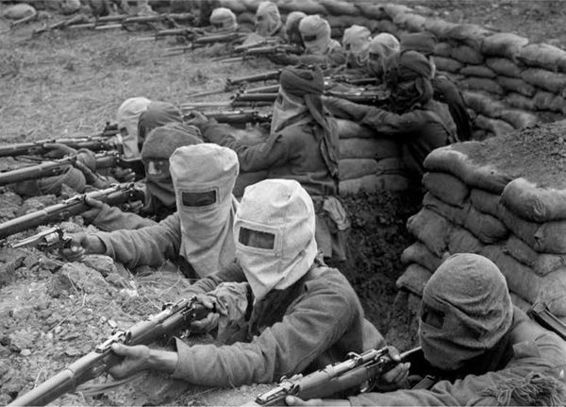
While India's military and wars since Independence have been well chronicled within the country and abroad as part of a larger strategic landscape by scholars like Sumit Ganguly, Stephen Cohen, Steven Wilkinson, Jaswant Singh, Srinath Raghavan and Neville Maxwell, it is only a handful of civilian writers like Ravi Rikhye, Samir Chopra and P.V.S. Jagan Mohan who have written extensively about specific campaigns and battles. However, conflicts of all genres have only been covered in totality as part of India's current historical landscape, albeit briefly, in the most critically acclaimed book on contemporary Indian history, India after Gandhi, by Ramachandra Guha. I must also acknowledge the seminal contribution by a number of soldier scholars like Air Chief Marshal P.C. Lal, Major General D.K. Palit, Major K.C. Praval, Air Commodore Jasjit Singh, Air Marshal Bharat Kumar, Vice Admiral Mihir Roy and Rear Admiral Satyendra Singh to name but a few, who have taken pains to chronicle various wars, battles and campaigns.
Having taught extensively at two of India's flagship institutions of professional military education, I remain unhappy at the manner in which India's military history after Independence from colonial rule is being holistically studied at our military academies, war colleges and universities. None of our universities have a dedicated department of military history. Why blame the universities when the armed forces themselves have not seen value in scaling up dedicated departments of military history at the Indian Military Academy (1932), National Defence Academy (1954) and Defence Services Staff College (1948)?
What about writing dedicated military history? Because the study of military history stagnated after Independence, only a handful of modern historians like S.N. Prasad, U.P. Thapliyal and P.N. Khera have written exhaustive operational narratives on India's recent conflicts with research assistance from a few soldier scholars. These are laudable efforts no doubt, but are seen as works that have remained mainly as research references and not books that are easy-reading. Another worrying thought is that despite all the talk of inter-service cooperation and bonhomie, no scholar after Air Chief Marshal P.C. Lal has concurrently attempted to understand the three services to the extent required to chronicle and narrate an academically acceptable work on post-Independence military history of India.
With that as a backdrop, I have often wondered how we are going to sensitize India's huge youth bulge in the years ahead on the exploits of India's armed forces and the role they have played in nurturing and protecting its vibrant, secular, multi-ethnic and multicultural democracy. I have also wondered whether the absence of a focused military history discourse in our university and education system would lead to a decline in the attractiveness of the armed forces as a career option. Military matters in a large and inclusive democracy like India are not the exclusive preserve of a handful of generals, bureaucrats, politicians and strategists. War is serious business and when the citizenry is largely ignorant about the circumstances under which a nation goes to war, the chances that a nation pays heavily for the mistakes made by a few decision makers looms large on the horizon. The widespread study of military history is one way to avoid such aberrations.
Western Perspective
The use of force as a tool of statecraft is as old as civilization itself and after the evolution of monarchies and nation states it has primarily been exercised as an instrument of policy by the sovereign or the state through the military. Military history from a political context therefore is the structured study of application of force in furtherance of statecraft and state policy – and that is how I suppose Clausewitz or for that matter Kautilya would have liked it to be known as.
Western democracies have emerged and reinvented themselves around armed conflict and wars. Monarchies and autocratic forms of rule have been replaced with myriad forms of democracy by waging war. Modern theories of international relations, which look at balance of power and national interest, or universalism and collective security as a final objective of state policy, invariably have had war as a tool to achieve it, although it was always articulated as a least preferred option. The West has for long considered the study of war as being vital for survival of the state in the face of periodic threats from totalitarian forms of invasive and disruptive political philosophies. Nations like the US, Great Britain, France – all flourishing democracies – have government-backed institutions that take great pride in chronicling wars and saving the lessons for posterity. Writers and scholars like William Dalrymple and Christopher Bayly have wonderfully chronicled the military exploits of the British Raj even when it was in its death throes. Academics like Sir Michael Howard, John Keegan, Russell Weigley and Williamson Murray have made a name for themselves as military historians of rare pedigree, while journalist scholars like Rick Atkinson continue to tell the story of the exploits of American soldiers in World War II through masterfully written narratives.
The Way Ahead
Unfortunately, India has no such system in place where scholars who aspire to showcase the operational exploits of free India's military campaigns in easily digestible narratives are encouraged by mainstream academia. In 2012, I was exploring opportunities to take a sabbatical and write a comprehensive joint narrative of India's modern conflicts, but, to my horror, not one Indian university or think tank was willing to take me under their umbrella without my own funding. One distinguished professor even told me:
'We are not really interested in the past – we want to look ahead and prognosticate about the future!'
War in the current century will be waged not only to meet political objectives but also to express cultural, ethnic and civilizational aspirations. The military history of the twenty-first century may be distinctly different from previous centuries; politically motivated wars in the twenty-first century may be better calibrated and controlled, and may result in fewer casualties as compared to the horrific wars of the previous centuries; the savagery of war may not be as widespread as it was earlier, but ethnic and religious bigotry will continue to throw up horrific acts of barbarism and brutality reminiscent of medieval times.
The objectives of structured interstate wars and insurgencies, however, will be the same if one were to look at them as Clausewitz did – as merely an extension of politics and a means of forcing your adversary to do what you want him to do, should diplomacy or other benign forms of negotiating tools fail. Ethnic, religious and civilizational wars would continue to be driven as they were in the past by emotions like hatred and fear. However, the bottom line would remain that wars would continue to be significant markers in geopolitics as long as greed, fear, honour and interest continue to drive relationships between countries and people.
It is understandable that India does not want to abandon its overarching principles of non-violence and peaceful coexistence as key determinants of its political philosophy. However, considering the realities of modern geostrategic compulsions and expanding national interests, it is high time that it institutes radical changes in the way it records, analyses and disseminates its military history and record of wars that it has fought after Independence. I have disliked the tags of 'pacifist' and 'soft state' being attached to modern India whenever India's internal and external wars are discussed in international seminars and academic circles. Honest chronicling of India's recent wars and conflicts by a soldier scholar with both operational and academic competencies in the form of a flowing narrative, will, I hope, not only contribute to showcasing the country's military exploits as an intrinsic part of its modern history, but also help in the wider mission of helping the new generation understand the perils of going to war. Reinforcing my mission is a wonderfully researched book by a Yale academic, Prof. Steven Wilkinson, titled Army and Democracy: The Military and Indian Democracy. Published in early 2015, he writes:3Steven Wilkinson, Army and Nation: The Military and Indian Democracy (Cambridge, Massachusetts: Harvard University Press, 2015), from the Kindle edition, Introduction: The Question.
New data I have collected for this book show that immediately after independence in 1947 around three quarters of India's officers and men were from a small number of provinces and 'classes'… Half of all India's most senior officers came from one single province, Punjab, with only 5 per cent of the new state's population. This kind of narrowly recruited and cohesive army is dangerous … Yet despite these challenges India has managed to keep the army out of politics and preserving its democracy unlike its neighbor Pakistan, which has had three long periods of military rule and a lot of indirect army control and interference besides.4Ibid., p. 9.
Reading Prof. Wilkinson's book, which largely attributes the apolitical nature of independent India's armed forces to structural and deft manoeuvring in the form of coup-proofing by its political masters, only steeled my resolve to tell the story of modern India's soldiers, sailors and airmen who have not only 'stayed clear of politicizing the armed forces but, more importantly, have protected India's democracy for almost seven decades.
At the purely academic level, I cannot but help share a few perspectives from a paper written recently by Dr Tami Davis Biddle, a faculty member in the Department of National Security and Strategy at the US Army War College. Co-authored with Robert M. Citino from the University of North Texas and titled 'The Role of Military History in the Contemporary Academy', the paper is a powerful plea for the widespread examination and analysis of why societies go to war and its various consequences.5Tami Davis Biddle and Robert M. Citino, 'The Role of Military History in the Contemporary Academy,' A Society for Military History White Paper, 30 November 2014. The authors go on to argue that military history not only enriches traditional historical discourse, but also influences work in political science, sociology and public policy and plays an important role in developing thoughtful and informed citizens. Hence, its importance transcends traditional academic boundaries. My understanding of military history blends perfectly with what the two learned academics pitch for when they write:6Ibid.
Several decades ago the phrase 'new military history' arose to highlight a shift away from traditional narratives that focused on generalship and troop movements on the battlefield. The 'new military history' is simply what military history is today: broad based, inclusive and written from a wide range of perspectives.7Ibid.
The duo emphatically argue that 'to avoid the study of war is to undermine our opportunity to fully comprehend ourselves – and our evolution over time – in social, political, psychological, scientific and technological realms.'8Ibid.
'To avoid the study of war is to undermine our opportunity to fully comprehend ourselves – and our evolution over time – in social, political, psychological, scientific and technological realms.'
It is only right that I commence my narrative in Part II by highlighting the DNA and ethos of India's 1.5-million-strong armed forces as its military exploits over the last five decades are not only largely unknown in most parts of the world, but in many parts of India too. Large portions of southern India are still untouched by the influence of the armed forces; fast-developing Gujarat has amongst the lowest intake into the armed forces despite sharing a long desert and swamp border with Pakistan. The eastern states of Odisha and West Bengal, and portions of the large central state of Madhya Pradesh fare no better. It was time, I felt, that profiling the DNA of one of the finest and most professional armed forces in the world was the first step to ensure that the country at large consistently acknowledged its contribution, both in peace and war.
Another reason to reiterate the importance of studying India's armed forces and their performance in wars is that if prescriptive theories of modern warfare turn out to be right, and if conventional wars are largely going to be consigned to the pages of history, it is highly possible that the rich ethos, war-fighting traditions and exploits of India's soldiers, sailors and airmen could fade away into oblivion in the midst of spectacular economic growth, development and prosperity. However, that said, the retention of large volunteer armed forces in the years ahead will remain an inescapable necessity. While this large force may not engage in widespread military action, continued regional instability across multiple fronts and internal fissures and cracks will make it impossible for India to downsize its armed forces.8Ibid.
Indian tales of courage, valour and bravery in the face of insurmountable odds are not an exclusive preserve of the warrior princes of ancient and medieval India, or those of a colonial force in the dust and grime of WW I and WW II, but also of soldiers, sailors and airmen of a secular, democratic and modern India. One of the ways of upholding the pride of India's armed forces in a largely peaceful world and understanding their role in maintaining peace and stability is by telling its story to people at large in a manner that is neither celebratory or self-adulatory; nor derogatory or overly critical; but in a way that allows us to learn from our mistakes and take pride in our past. It is only right that the senior service, the Indian Army, occupies pride of place in any discourse on the DNA of India's armed forces.
Footnotes
- From a talk delivered by the author at the Nehru Memorial Museum and Library titled 'The Neglect of Modern Indian Military History and its Impact on India's Strategic Culture' on 16 July 2015.
- He represents the Aam Aadmi Party, having won a legislative election in Delhi during the 2013 state elections.
- Steven Wilkinson, Army and Nation: The Military and Indian Democracy (Cambridge, Massachusetts: Harvard University Press, 2015), from the Kindle edition, Introduction: The Question.
- Ibid., p. 9.
- Tami Davis Biddle and Robert M. Citino, 'The Role of Military History in the Contemporary Academy,' A Society for Military History White Paper, 30 November 2014.
- Ibid.
- Ibid.
- Ibid.