Part II: The DNA of India's Armed Forces
The Indian Army: Indian or Colonial?
My packs are full and ready; my rifle is oiled and loaded. As I walk the road of death, I fear no one. I am an Indian soldier born to fight. Sleep peacefully in your homes, we are guarding the frontiers – Jai Hind.
Showcasing the Indian Army
Ayo Gorkhali! Har Har Mahadev, Jwala Mata ki Jai, Bole So Nihal Sat Sri Akal and many more war cries represent the astounding diversity of the Indian Army; a diversity, which is the key DNA of a force that has fought in the alien lands of Afghanistan, Mesopotamia, Egypt, Abyssinia, Italy, France and Burma in the two great wars. In its modern avatar, it has done the nation proud in battles fought on varied terrain – from the icy heights of the Siachen glacier to the dense jungles of Congo as part of UN peacekeeping missions; and from the sun-baked deserts of Rajasthan to the pristine valleys and lofty mountains of Jammu and Kashmir. It has fought adversaries ranging from clear-cut enemies on conventional battlefields, to jihadis and misguided fellow countrymen of similar stock – embedded within the local population in ill-defined battle spaces – in what is commonly known as counter-insurgency and counter-terrorism operations.
Even though I joined the Indian Air Force and engaged in many bruising academic and intellectual battles with my colleagues from the army and navy on myriad issues of joint operations at the Defence Services Staff College, where I spent some of the best years of my service career, my emotional connect with the Indian Army runs deeper than I could imagine. This was because of my interest in military history and the fact that my grandfather was seconded from the Nizam of Hyderabad's army as a sepoy to fight alongside the Indian Army in Iraq in WW I. Though I have not been able to dig up much about his experiences in Iraq, I was motivated to get to know the Indian Army better.
Late Medieval Indian Ethos
Popular Western discourse on the origins and ethos of the Indian Army repeatedly emphasizes that the colonial era from the middle of the eighteenth century to the period when India gained Independence from British rule marks the period in which the Indian Army emerged as a cohesive fighting arm. However, it is only fair to acknowledge that the DNA of the Indian Army goes beyond that to a period when two martial communities, the Marathas and the Sikhs, were contesting the Mughals for control over vast tracts of the country.
The Marathas and Sikhs
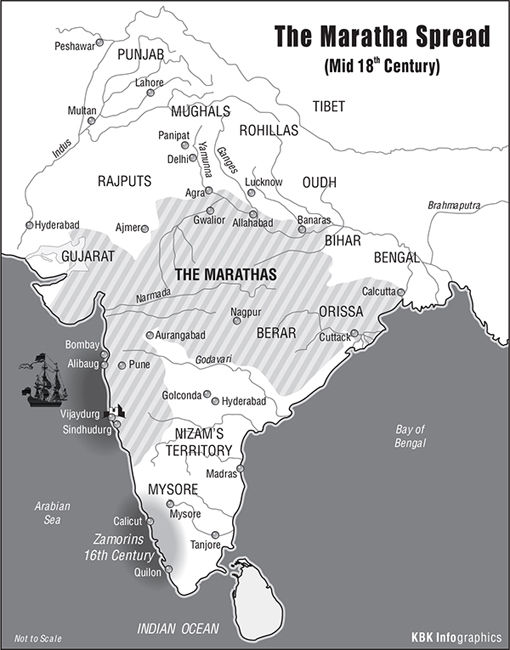
First was the purely home-bred guerrilla force under Shivaji. The courageous and wily Maratha chieftain along with his successors and, subsequently, the Peshwas, defied the Mughals and other Muslim invaders for almost a century from the latter half of the seventeenth century2Philip Mason, A Matter of Honour (London: EBD Education in arrangement with Jonathan Cape, 1988), p. 50–54. For an operational and tactical analysis of Shivaji the warrior, also see Colonel R.D. Palsokar, Shivaji: The Great Guerrilla (Dehradun: Natraj Publishers, 2003). and expanded the Maratha Empire till it covered much of the Indian heartland. Next were the hardy and proud Sikhs and Dogras under Maharaja Ranjit Singh, who kept the East India Company at bay for over four decades in the early part of the nineteenth century with a modern and well-trained hybrid army of multi-ethnic and multi-religious troops and generals comprising Sikhs, Dogras, Muslims and even French advisors.3Patwant Singh and Jyoti Rai, The Empire of the Sikhs (New Delhi: Hay House India, 2008), p. 171–73. The armies of Shivaji, his Maratha successors, the Peshwas, and Ranjit Singh revolved around a highly organized structure, disciplined cadres and focused leadership that quickly assimilated new military ideas and technologies brought in from warring Europe.
The Maratha Empire at the peak of Shivaji's reign extended across large swathes of the Deccan Plateau and included large portions of what are currently the Indian states of Gujarat, Maharashtra, Karnataka and Andhra Pradesh. The robustness, expansiveness, self-belief and longevity of Shivaji's military legacy translated into Maratha military power, which dominated most of the Deccan Plateau and the Indian heartland up to the River Indus for almost a century after Shivaji's death till Ahmed Shah Abdali, the Afghan general, comprehensively defeated the Maratha general Sadashivrao Bhau at the Third Battle of Panipat in 1761. This defeat, accompanied by the fragmentation of the Maratha Empire into a confederacy of five states, accelerated the decline of the Marathas till the British East India Company finally wore them down in the early part of the nineteenth century. The Marathas under Shivaji can, therefore, rightly lay claim to being amongst the pioneers of the modern Indian Army in terms of providing a totally indigenous flavour to soldiering.4For a painstakingly researched book on Maratha power after Shivaji, see Uday S. Kulkarni, Solstice at Panipat: 14 January 1761 (Pune: Mulla Mutha Publishers, 2012). In real terms, the prolonged struggle of the Marathas to contest Mughal domination of India could well be considered as India's first war of independence from foreign rule. No praise for Shivaji is better than the one bestowed on him by James Grant Duff, a captain in the First Regiment of the Bombay Grenadiers and later the political resident at Satara. Writing effusively in his three-volume book The History of The Mahrattas in 1863, he says:
Sivajee was patient and deliberate in his plans, ardent, resolute and persevering in his execution. But to sum up all, let us contrast his craft, pliancy and humility with his boldness, firmness and ambition; his power of inspiring enthusiasm; the dash of a partisan adventurer, with the order and economy of a statesman; and lastly, the wisdom of his plans which raised the despised Hindoos to sovereignty.5James Grant Duff, History of the Mahrattas, Vols I, II & III (New Delhi: Low Price Publications, 1990, first published in 1863), p. 215.
Notwithstanding the rather disparaging remarks made about Maratha troops by Lord Roberts6Stephen P. Cohen, The Indian Army: Its Contribution to the Development of a Nation (New Delhi: Oxford University Press, 1990), p. 45. which led to their exclusion as a martial race during the period when the reorganization of the Indian Army was being done in the aftermath of the First War of Independence, or the Indian Mutiny as the English liked to call it, the legacy of the Marathas provides adequate indigenous inspiration for the Indian Army even today. Mason writes very perceptively about Mughal inefficiency and Maratha nationalism and this is one of the reasons why I chose to ignore the Mughal legacy. Of course, as far as I was concerned, the Mughals were invaders, and notwithstanding Emperor Akbar's attempts at integrating the Rajputs and creating a pan-Indian ethos, I am inclined to look at the Mughals as foreigners who ravaged India. Mason writes with great clarity:
Thus the Mughal armies combined almost every military vice. They were without discipline, they could not move swiftly or manoeuvre in the face of an enemy, their supply arrangements were rapacious and inadequate, and above all there was neither the spirit nor organization to hold them together. In a few generations, they had lost the hardiness, the simplicity and the mobility of the invaders under Babur … The Maratha Army at its best suggested the beginning of the kind of nation state that grew up in England from Tudor times onward. The idea of a nation was still hardly understood in India. But had Sivaji lived longer and had his principles been followed by his successors, the Maratha spirit would have surely grown into nationalism.7Philip Mason, A Matter of Honour (London: EBD Education in arrangement with Jonathan Cape, 1988), p. 50.
However, Bipin Chandra, a reputed Indian historian is scathing in his criticism of the Marathas after they promised so much. He writes:
Unlike the Mughals, they failed to give sound administration to the people outside Maharashtra. They could not inspire the Indian people with any higher degree of loyalty than the Mughals had succeeded in doing. Their dominion, too, depended on force and force alone. The only way in which the Marathas could have stood up to the rising British power was to have transformed their state into a modern state. This they failed to do.8Bipin Chandra, History of Modern India (New Delhi: Orient Blackswan, 2009), p. 41.
Though they started off as hardy fighters with good fighting skills and frugal habits, it is possible that they mellowed over the years after acquiring static and empire characteristics. The Marathas still are hardy, courageous, disciplined and frugal in their approach to both life and soldiering; traits that live on with the Maratha Light Infantry and the Mahar Regiment, two regiments that continue to draw most of their soldiers from the warrior and peasant communities of the Deccan Plateau.
Some military historians may contest the exclusion of Haider Ali, Tipu Sultan and the Mysore Army from a modern Indian military discourse – not without good reason as they were amongst the first to contest the East India Company's expansion into the Indian hinterland in the late eighteenth century.9Philip Mason, A Matter of Honour (London: EBD Education in arrangement with Jonathan Cape, 1988), p. 133–34. However, the main reasons for doing so are the relatively short duration of this contest as compared to the Maratha and the Sikh experience, the fragmented demographic profile of the soldiers who comprised the Mysore Army, and poor strategic vision on the part of Tipu Sultan, which saw him fight multiple adversaries (Nizam of Hyderabad, the British and the Marathas) at the same time.10Bipin Chandra, History of Modern India (New Delhi: Orient Blackswan, 2009), p. 27.
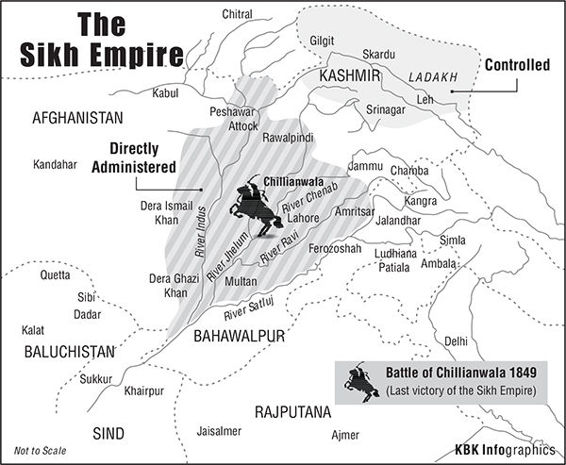
After the Marathas, the longest-serving martial community to have left an indelible impact on the ethos of the contemporary Indian Army has been the Sikh warrior clan. The remarkable metamorphosis of these peace-loving and agrarian people into a fierce warrior community can be attributed primarily to the persistent persecution by Mughal emperors.11Khushwant Singh, A History of the Sikhs, Vol. I: 1469–1839 (New Delhi: Oxford University Press, 1999), p. 73–94. The book is a highly readable and extensively researched narrative of Sikh history by one of India's most popular and prolific authors and columnists. Successive leaders, or gurus, as they were called, resisted persecution by taking up arms and organizing the community into twelve misls or confederacies based on equality.12Philip Mason, A Matter of Honour (London: EBD Education in arrangement with Jonathan Cape, 1988), p. 353–54. Also see Bipin Chandra, History of Modern India (New Delhi: Orient Blackswan, 2009), p. 33. This, they soon realized, was the only way that the clan would survive. Sandwiched on the plains of Punjab as they were by the Mughal Empire to the south and south-east and persistent Persian and Afghan invaders to the north-west, the Sikhs emerged as a warrior clan during the time of Guru Gobind Singh, the tenth and last Sikh guru.13Patwant Singh and Jyoti Rai, The Empire of the Sikhs (New Delhi: Hay House India, 2008), p. 63–66. Also see Philip Mason, A Matter of Honour (London: EBD Education in arrangement with Jonathan Cape, 1988), p. 259. From then on, armed as they were with a powerful set of personal beliefs that were symbolized by the five Ks – Kesh or long hair, Kanga or comb, Kara or a steel wrist band, Kachh or short breeches and Kirpan or a short sword14Ibid., p. 63. Also see Khushwant Singh, A History of the Sikhs, Vol. I: 1469–1839 (New Delhi: Oxford University Press, 1999), p. 81. – they were a changed clan, bound by a powerfully secular scripture called the Guru Granth Sahib. However, like the Marathas, the military prowess of the Sikhs can be largely attributed to one leader, the enigmatic and dynamic Maharaja Ranjit Singh. Amongst his numerous achievements were the modernization of the Sikh armies and the introduction of a 'combined arms' strategy that saw the concurrent expansion of the infantry and artillery along with the traditional Sikh cavalry.15Khushwant Singh, A History of the Sikhs, Vol. I: 1469–1839 (New Delhi: Oxford University Press, 1999), p. 199–200. Prior to Maharaja Ranjit Singh assuming power, the armies of the Sikh chieftains were dominated by the cavalry, and foot soldiers were generally looked down upon.
Endowed with exceptional tactical acumen and a truly strategic mindset, Ranjit Singh realized that the only way to survive in that region was by expanding outwards and minimizing the spaces from where invaders could descend on the fertile and rich alluvial plains of Punjab. Pitted against this powerful regional satrap, the British, after initially attempting to take him head-on militarily, realized that it would be more appropriate to appease him while they fought the Marathas and bide their time before annexing the Sikh Empire.
Acknowledging his suzerainty over large tracts of Punjab, North-West Frontier Province and portions of Kashmir and Ladakh in the Lahore Treaty of 1809, the British felt reasonably certain that north-west India was secure from Russian encroachment.16For a detailed review of the Lahore Treaty of 1809, see Khushwant Singh, A History of the Sikhs, Vol. I: 1469–1839 (New Delhi: Oxford University Press, 1999), p. 362. They even ignored his forays into eastern Afghanistan against a weakening Durrani kingdom.17William Dalrymple, Return of a King (London: Bloomsbury, 2013), p. 11. This allowed them to concentrate on consolidating their hold on the Indian hinterland. Ranjit Singh's death in 1839 created a vacuum in the Sikh leadership which the British exploited. The two Anglo-Sikh wars during 1848–49 severely denuded the fighting potential of the Sikhs despite a large British army almost being defeated by an alliance of Sikh chieftains in the Battle of Chilianwalla on 13 January 1849.18'The 12 Misls of Ranjit Singh's Era,' http://www.indianmilitaryhistory.org/index.html (accessed 25 October 2014). For a detailed description of the Battle of Chilianwalla, see K.S. Randhawa, 'When fate and destiny conspired against Sikh Victory,' The Tribune, Chandigarh, 13 January 2002, http://www.tribuneindia.com/2002/20020113/edit.htm#1 (accessed 15 October 2014). The persistent British, however, broke the back of Sikh military capability a month later in the Battle of Gujarat, which marked the end of organized Sikh military resistance to British expansion.19Khushwant Singh, A History of the Sikhs – Vol. II: 1839–2004 (New Delhi: Oxford University Press, 2009), p. 80–81. Ranjit Singh's prophetic words to a cartographer a few months before his death would come true:
'What does the red colour stand for?' asked Maharaja Ranjit Singh when he was shown a map of India. 'Your Majesty,' replied the cartographer, 'red marks the extent of British possessions.' The maharaja scanned the map with his single eye and saw nearly the whole of Hindustan except the Punjab marked red. He turned to his courtiers and remarked, 'ek roz sab lal ho jaiga – one day it will all be red.'20Khushwant Singh, A History of the Sikhs – Vol. II: 1839–2004 (New Delhi: Oxford University Press, 2009), p. 1.
To the credit of the British, instead of alienating the Sikhs by engaging them in constant conflict, the British won them over with a combination of deft diplomacy and devious manipulation.21Philip Mason, A Matter of Honour (London: EBD Education in arrangement with Jonathan Cape, 1988), p. 307–308. As a result, they were able to call upon the Sikh leaders to assist them in defeating the Marathas in the last Maratha war, quelling stray expressions of military opposition from the Rajputs and the Jats, before using them to put down the Indian Mutiny of 1857. The gradual and peaceful assimilation of the army of the Sikh Empire into the colonial British Indian Army is one of the great success stories of the British 'divide and rule' policy wherein they were able to convince Sikh warriors that their martial legacy would be better protected by the British. The Sikh Regiment is one of the oldest regiments of the Indian Army and it was only befitting that the first military action taken by India after Independence had 1 Sikh Regiment leading the way.22Ian Cardozo, ed., The Indian Army: A Brief History (New Delhi: Centre for Armed Forces Historical Research, 2005), p. 66. Part III of the book will address the exploits of this regiment in greater detail.
The Rajputs and the Jats
Hailing from parts of the plains of northern India, the Rajputs and the Jats, the former being an acknowledged martial community and the latter of hardy peasant stock, can also rightly claim to be stakeholders and participants in the creation of India's modern army. While the Rajputs occupy centre stage in any military discourse on medieval India and were at the forefront of the initial opposition to the Mughals till the late sixteenth century,23Bipin Chandra, History of Modern India (New Delhi: Orient Blackswan, 2009), p. 30–31. their proximity to the Mughal Empire ensured that their warrior potential was systematically degraded by the Mughals. As the fighting potential of most Rajput rulers ebbed, they amalgamated themselves into the Mughal Empire and ceased to be an independent fighting entity like the Sikhs or Marathas. However, the British were keen to exploit their martial prowess while restructuring the Indian Army later. The Jats are a community of hardy peasants hailing from what is today the Indian state of Haryana, part of western Uttar Pradesh and eastern Rajasthan. They too met with the same fate as the Rajputs, and were either defeated in battle or amalgamated into the Mughal army. Like the Rajputs, they too would be included in the future restructuring of the Indian Army. It is about time to move on and study the impact of India's colonial masters on the Indian Army as it moved into turbulent times of the mid-eighteenth century.
British Legacy
Restructuring and Professionalism
Considering the huge volume of both primary and secondary sources of literature that is available on the indelible imprint of British colonial legacy on the shaping of India's modern army, it is impossible not to acknowledge their important role in this process. The influence of the British East India Company can be traced to the operational ethos of the three provincial armies of Madras, Bombay and Bengal. However, the fragmented and personality-oriented leadership, along with deteriorating officer–men relationship, was considered by the British Indian Army as being responsible for the revolt of 1857, also called by many Indian historians as India's First War of Independence.24Philip Mason, A Matter of Honour (London: EBD Education in arrangement with Jonathan Cape, 1988), p. 246–68. The ensuing slow response by the armies of the East India Company to put down the rising precipitated the rapid restructuring of the British Indian Army in India as the Company was replaced by the Crown as the direct ruler of the colony of India. Shocked by the rebellion of large sections of the Bengal army and a sprinkling of Muslim, Maratha and Jat warriors, who constituted the bulk of the rebel Indian force that aspired to defeat the East India Company, the Crown took over the reins of governance of its colonies in India from the Company. It ordered a sweeping restructuring of the British Indian Army, placing it under a single commander-in-chief (C-in-C). Steered by battle-hardened C-in-Cs like Lord Roberts and Lord Kitchener, the transformation of the British army in India from a set of regional armies to a single army that was capable of furthering the colonial and strategic objectives of the Crown was complete by the end of the first decade of the twentieth century.
A change in recruitment pattern was accompanied by professionalism and officer training. This was then put to test in various operational campaigns in Afghanistan and NWFP and validated in the cauldron of WW I. These times also brought with it the first signs of conflict between the viceroy and the C-in-C over who would exercise control over the military. The clash between Lord Curzon, the imperious viceroy, and Lord Kitchener, a battle-hardened C-in-C with experience during the Boer War and the Battle of Omdurman in the late nineteenth century, is well documented and quite fascinating.25Stephen P. Cohen, The Indian Army: Its Contribution to the Development of a Nation (New Delhi: Oxford University Press, 1990), p. 22–27.
Despite the recommendations of a few committees like the Peel Commission in 1859 and the Eden Commission in 1879, which recommended an inclusive approach to recruitment,26Ibid., p. 40–41. one of the first steps that Lord Kitchener initiated – influenced in no small measure by the analysis of Lord Roberts, his illustrious predecessor a few years earlier – was a recruitment drive which identified martial races from different parts of the subcontinent. These were chosen carefully from amongst races that had displayed loyalty to the Crown during the First War of Independence and possessed singular fighting skills. Stephen Cohen has liberally quoted from the writing of Lord Roberts in his book and I will follow suit:
Each cold season I made long tours in order to acquaint myself with the needs and capabilities of the Madras Army. I tried hard to discover in them those fighting qualities which had distinguished their forefathers during the wars of the last and beginning of the present century. But long years of peace, and the security of prosperity attending it, had evidently had upon them, as they always seemed to have on Asiatics, a softening and deteriorating effect; and I was forced to the conclusion that the ancient military spirit had died in them, as it had died in the ordinary Hindustani of Bengal and the Maratha of Bombay, and that they could no longer with safety be pitted against warlike races and employed outside the limits of Southern India.27Lord Roberts, quoted in Stephen P. Cohen, The Indian Army: Its Contribution to the Development of a Nation (New Delhi: Oxford University Press, 1990), p. 46.
From these races were created battalions and regiments that would form the bulk of fighting troops for the British Indian Army. These troops would be trained to fight as professional soldiers with loyalty to the regimental flag and their community, and not get swayed and distracted by nationalistic aspirations that were expected to emerge in the years following the First War of Independence. Great pains were taken to map demographic trends and identify those races in the three Presidency armies of the East India Company (Bengal, Bombay and Madras) that either did not display adequate martial characteristics or had displayed anti-British sentiment during the revolt of 1857.28Bipin Chandra, History of Modern India (New Delhi: Orient Blackswan, 2009), p. 164. It is for these reasons that the Bengalis, Madrasis, Marathas and Mahars (lower-caste Maratha soldiers who served in large numbers in Shivaji's army) were excluded from the list of martial races and retained only as sapper or engineer regiments. The exclusion of Maharashtrians and Bengalis in part explains the key roles they played in catalysing opposition to colonial rule in late nineteenth and twentieth centuries. Interestingly, most major leaders of the Congress as also of armed revolutionary groups were, before 1920, from either Bengal or Maharashtra.29Discussion with Ramachandra Guha on email, 19 November 2014.
The British rightly identified the fighting capabilities of both the Rajputs and the Jats along with the Sikhs, Gorkhas, Dogras and select Muslim communities from Punjab and Baluchistan, and included them as key martial communities in their reorganization plan.30Philip Mason, A Matter of Honour (London: EBD Education in arrangement with Jonathan Cape, 1988), p. 347–48. They did this also because the recruiting areas of these races were closer to the North-West Frontier Province, which was deemed to be the main area from where a security threat to the British Empire was envisaged from the expanding Russian Empire.31William Dalrymple, Return of a King (London: Bloomsbury, 2013), p. 6–8.
A word about the indomitable and courageous Gorkhas is in order. The Gorkhas are a martial clan from the area encompassing modern-day Nepal with fierce fighting skills that belie their short stature. Relatively insulated from the Indian masses and having no links with the nationalist movement, they were defeated by the British in the last Gorkha War in 1816 after having defied the East India Company for almost two decades.32For a detailed overview of the Anglo-Gorkha Wars see: http://en.wikipedia.org/wiki/Anglo-Nepalese_War (accessed 24 April 2013). Promised regular employment by the Crown after being rightly identified as ideal material for recruitment as soldiers, the Gorkhas were initially insulated from the rest of the martial races, and moulded and trained to be loyal to the regiment and the Crown. Ten Gorkha regiments of two battalions each emerged from this drive and proved to be a master stroke by the British as the Gorkhas were to repeatedly prove themselves in battle.
From a nationalistic perspective, the shrewdness and deviousness of the British was clearly evident as they played the communal, caste and race cards in an attempt to polarize the Indian Army so that it would never rise as one body again. Charles Wood, secretary of state for India, in a letter to the viceroy wrote:
I never wish to see again a great army, very much the same in its feelings and prejudices and connections, confident in its strength, and so disposed to rise in rebellion together. If one regiment mutinies, I should like to have the next regiment so alien that it would be ready to fire into it.33Bipin Chandra, History of Modern India (New Delhi: Orient Blackswan, 2009), p. 164.
Changed recruitment patterns were concurrently accompanied by a concerted drive at improving the quality of leadership by replacing officers of the East India Company with regular officers of the Crown and introducing compulsory professional military education. Many of these officers, with battle experience from the Napoleonic and the two Afghan Wars between 1839 and 1880, were able to infuse a sense of professionalism, discipline and regimental loyalty, and offer security to the troops and their families with the promise of a regular income. Thus, by the end of the nineteenth century, the British Indian Army had transformed from a ragtag army to a professional force that moulded the raw fighting abilities of India's martial races into excellent military capability with Western professionalism and leadership, exposure to technology and latest armaments, and, most importantly, a sense of regimental belonging and ownership that transcended nationalistic feelings. Finally, though the decision to restructure the Indian Army commenced in 1880, it finally saw fruition only in 1902 when Lord Kitchener renumbered the various units and created a unified army.34John Gaylor, Sons of John Company: The Indian and Pakistan Armies, 1901–1991 (Turnbridge Wells: Para Press Ltd, 1992), p. 5. What Kitchener initially did was to merge the three Presidency armies and the Punjab Frontier Force into one army with its cavalry and infantry regiments numbered consecutively.35John Connell, Auchinleck: A Biography of Field Marshal Sir Claude Auchinleck (London: Cassell, 1959), p. 767. Apart from one more regimental restructuring in the inter-war years, the preceding paragraphs encapsulate in short the British legacy of the Indian Army – something that lives on today.
Analysing the recovery of the British Indian Army from the shock of the revolt of 1857, Stephen Rosen, a Harvard professor, identified four distinct reasons why the army of the East India Company and the British Indian Army were able to prevail over the Mughal, Mysore, Maratha and Sikh armies despite their significant numerical disadvantage. In his sweeping and significantly incisive book on the evolution of the Indian Army entitled India and Its Armies, he goes on to identify professionalism, unity, organizational cohesiveness and a relative detachment from society as being the main reasons for the spread of the British Empire in India through military conquest.36Stephen P. Rosen, India and Its Armies (New Delhi: Oxford University Press, 1996), p. 196. While drill, discipline and careful attention to logistics allowed the army of the Company to prevail over their Indian opponents in the eighteenth century,37Michael Howard, War in European History (Oxford: Oxford University Press, 2009), p. 121. rapid assimilation of modern technologies from the battlefields of Europe led to a significant asymmetry between the Company's armies and, later, the British Indian Army and the various indigenous armies like those of the Marathas and Sikhs.38Ibid. Significant amongst these were improved field and siege artillery with superior firepower created out of systematic improvements in gunpowder at laboratories and ordnance factories.39Kaushik Roy, 'The Armed Expansion of the East India Company: 1740s-1849,' in Daniel P. Marston and Chander S. Sundaram, ed., A Military History of India and South Asia, (New Delhi: Pentagon, 2007), p. 2.
The ability of the East India Company to assimilate and learn from their opponents was also a key factor in the continuous improvement in the military capabilities of the Company's army. Taking a leaf out of Mughal tactics and Tipu Sultan's weaponry, the Company used elephants to drag artillery and blast open Maratha forts in hilly terrain, and assimilated rockets into their firepower after having seen their effectiveness when used by Tipu against them in the Third Mysore War (1817–18).40Ibid., p. 6. The powerful Sikhs had their own set of cultural problems that hampered their tactical acumen. Obsessed with the predominance of lightly armed cavalry and hampered by hostility towards French advisors, the Sikhs, after the death of Maharaja Ranjit Singh, were no match in the long run against a combination of heavy cavalry and well-trained infantry that made up the Company's army. Finally, had the Marathas and the Sikhs shown adequate strategic vision and combined to take on the Company, sandwiching them from the south and north respectively, we may well have seen a different India at the turn of the nineteenth century.
Entering the Twentieth Century
As the Indian Army entered the twentieth century, hardened by its experience in the First and Second Afghan Wars and increasingly patronized and supported by the Crown, it started being seen through different lens by both the larger Indian populace and nationalist leaders. Since large sections of the rural population of India of those times were oppressed by landlords and zamindars, they searched for a livelihood other than agriculture. Apart from government service, which required some degree of literacy, the Indian Army represented an attractive employment option for the semi-literate and unskilled masses. Nationalist leaders also saw this as an opportunity to push for a greater 'Indianization' of the British Army in India including the recruitment of Indian officers. This, they hoped, would one day lead to a ground swell of popular support against the British leading to swaraj or independence for India from British rule. The British resisted this move for some time and it was only when the clouds of WW I loomed on the horizon did the British scurry to scale up recruitment and include what was called the King's Commission for selected Indian officers and the Viceroy's Commission for non-commissioned officers (also called jemadars, risaldars, risaldar major, subedar and subedar major). Realizing that they had to address the rising aspirations of diverse classes, some older regiments were revived; and others were recruited into supporting arms like the engineer regiments. Some castes, which had been dropped from the army list,41Stephen P. Cohen, The Indian Army: Its Contribution to the Development of a Nation (New Delhi: Oxford University Press, 1990), p. 60. were recruited into separate regiments like the Mahar Regiment that were created, and even the recruiting base from among the Sikhs was expanded. Interestingly, many of these recruitment patterns continue till today.
As a result of this massive recruitment drive, the strength of the Indian Army just prior to WW I rose to approximately 2,50,000 troops comprising old-fashioned cavalry, infantry and limited artillery. John Gaylor puts the fighting strength as closer to 1,50,000 in his book Sons of John Company: The Indian and Pakistan Armies.42John Gaylor, Sons of John Company: The Indian and Pakistan Armies, 1901–1991 (Turnbridge Wells: Para Press Ltd, 1992), p. 4. The army was unwieldy and broadly comprised thirty-nine cavalry regiments, 135 infantry battalions, three engineer or sapper regiments and a mere twelve mountain artillery batteries. Its primary role was to tackle insurgencies in the North-West Frontier Province and beat back any likely expansionist incursions into the region by Russia in the 'Great Game' that was unfolding in the region. The strength of the Indian Army continued to rise as the war progressed to a final figure of approximately 15,00,000 with over one million deployed overseas to support the war effort during WW I.43The exact figure according to Phillip Mason was 13,02,394. See Philip Mason, A Matter of Honour (London: EBD Education in arrangement with Jonathan Cape, 1988), p. 411.